Terrain-Matched Equipment for Northern Tier Conditions
Equipment rental in Port Allegany for contractors, landowners, and rural property work requiring reliable heavy iron
Frozen ground transitions and muddy spring conditions along the Allegheny River corridor create equipment demands that generic catalog machines cannot handle reliably. GrayMac Rentals provides equipment rental across Port Allegany and the Northern Tier with machinery selected for terrain challenges that include mud season recovery, hard freeze ground prep, and wooded site access where track width and ground pressure determine whether the job moves forward or stalls. You need terrain-matched equipment when soil conditions, seasonal transitions, or rural access routes exceed the capacity of standard rental catalog options designed for urban job sites with stable ground and paved access.
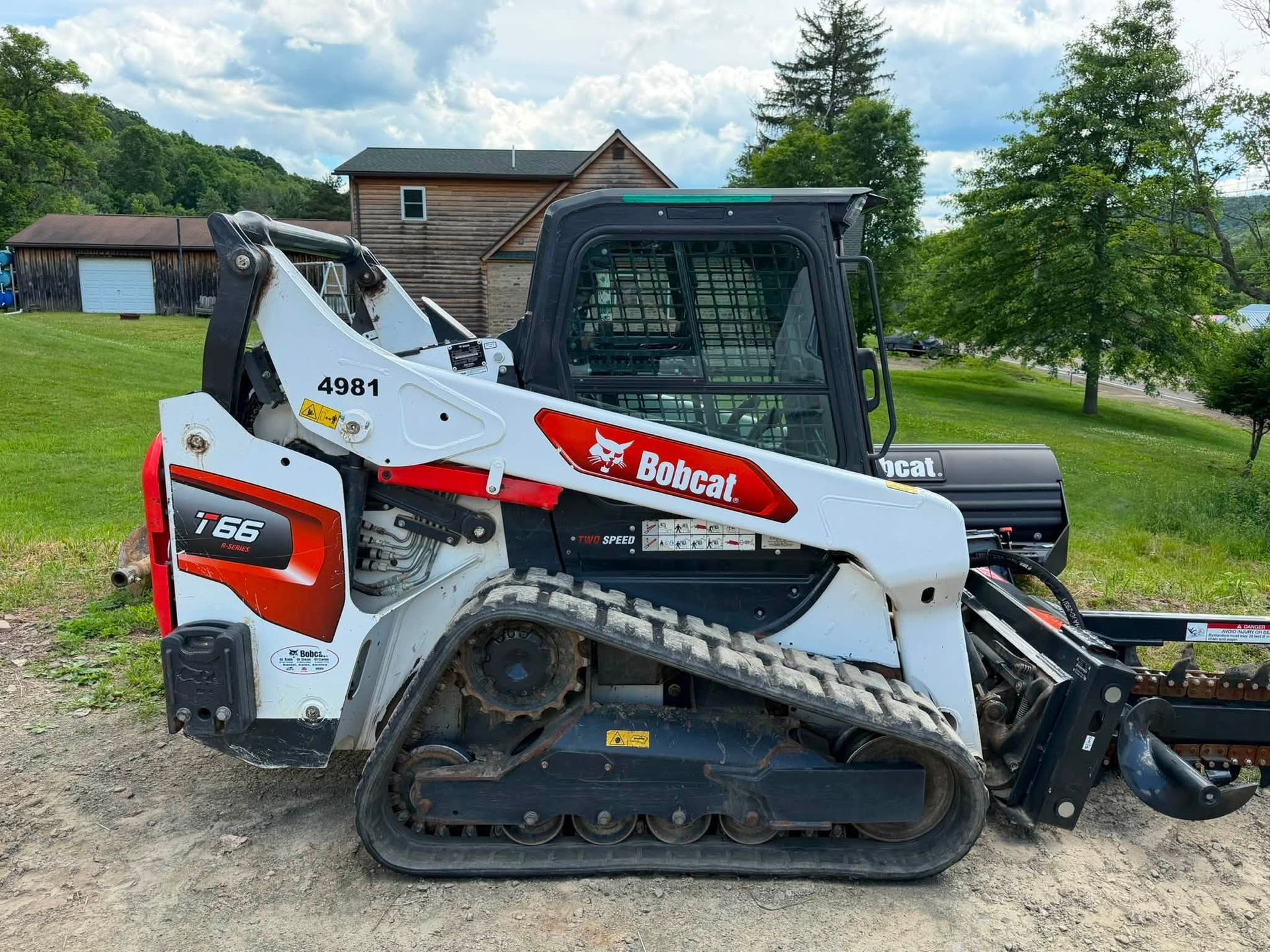
Equipment rental for Northern Tier sites involves matching machine specifications to ground conditions, slope angles, and access constraints that change with seasonal weather. A skid steer with standard tires loses traction and creates ruts in mud-season soil, while tracked machines distribute weight and maintain mobility when spring thaw softens site surfaces. Site prep, land clearing, foundation excavation, and drainage work depend on selecting equipment with the right operating weight, reach capacity, and ground contact pressure for current soil conditions rather than assuming catalog specifications translate to field performance.
Arrange an equipment consultation to identify machinery that matches your site terrain and seasonal ground conditions.
How Equipment Selection Affects Rural Job Performance
Equipment selection begins with evaluating site access, soil conditions, and task requirements rather than choosing based on hourly rate alone. A compact excavator with extendable tracks handles wooded sites where narrow paths and overhead clearance limit larger machines, while standard excavators provide faster cycle times on open sites with stable ground. Skid steers work efficiently for grading, material movement, and loader tasks on firm surfaces, but tracked skid steers or compact track loaders prevent rutting and maintain traction during wet conditions when rubber tires spin out and compact soil into impassable mud.
After equipment arrives on-site, you operate machinery suited to current ground conditions without the productivity loss that occurs when underpowered or improperly configured machines bog down, require constant repositioning, or damage access routes. Delivery and pickup across rural routes happens on schedules that account for road conditions, turnaround space, and trailer access limitations that affect transport logistics. Local delivery knowledge prevents the delays and rescheduling that occur when out-of-area rental companies underestimate Northern Tier route challenges.
Rental periods adjust to project timelines and weather delays, with options for daily, weekly, or monthly terms depending on job scope and seasonal uncertainty. Operator training and basic operational walkthroughs are available for customers unfamiliar with specific machine controls, though licensing requirements for commercial operation vary by equipment type and job site context. Fuel, maintenance, and minor repairs during the rental period follow standard equipment rental terms, with responsibility outlined at delivery.
Equipment rental across the Northern Tier requires matching machinery to seasonal ground conditions and rural site access challenges that change throughout the year.
What type of equipment works best for spring site prep on soft ground?
Tracked equipment such as compact track loaders or tracked skid steers distributes weight across a larger surface area, reducing ground pressure and preventing rutting during mud season when rubber-tired machines sink and lose traction. You maintain site mobility and avoid access damage by selecting machines designed for low ground pressure operation.
How much advance notice is required to schedule equipment delivery in Port Allegany?
Scheduling depends on equipment availability and seasonal demand, with spring months requiring several days to a week of advance notice due to higher contractor activity and mud-season project starts. You secure equipment during peak periods by booking ahead rather than relying on same-day availability that rental chains may offer in urban markets but cannot replicate on rural routes.
Do I need special licensing or training to operate rented heavy equipment?
Licensing requirements vary by equipment type and intended use, with commercial operation on public job sites often requiring certifications that private property work does not. You receive a basic operational walkthrough covering machine controls, safety features, and handling characteristics, though prior experience with similar equipment improves efficiency and reduces the learning curve.
What happens if equipment breaks down during the rental period?
Mechanical failures due to normal operation are covered under standard rental terms, with replacement equipment delivered as scheduling allows. You remain responsible for damage caused by operator error, improper use, or operating outside the machine's rated capacity, such as overloading buckets or exceeding slope angle limits.
Can equipment be delivered to remote rural sites with limited access?
Delivery to remote sites depends on road width, weight limits, overhead clearance, and turnaround space for trailers hauling tracked or wheeled equipment. You coordinate delivery logistics in advance, identifying access constraints and alternate drop-off points if direct site delivery is not feasible due to seasonal road restrictions or physical barriers.
Common Equipment Rental Questions
GrayMac Rentals operates equipment rental services built for Northern Tier terrain and seasonal conditions, with local delivery knowledge that prevents the delays and access issues common with out-of-area rental chains. Schedule an equipment consultation to match machinery to your site conditions and project requirements.